6 min read
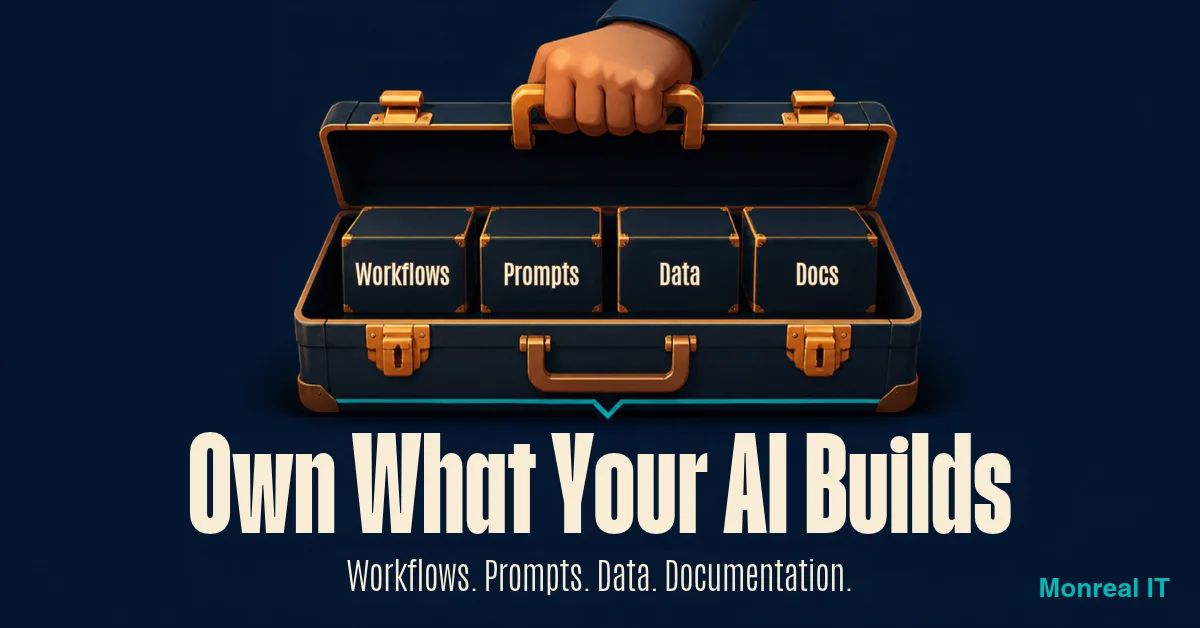
Own What Your AI Builds, Even If You Change Providers
 Bill Monreal : November 12, 2026
AI tools will keep changing. Learn what your business should own, from workflows to prompts and data, so your AI investment isn't stuck with one...

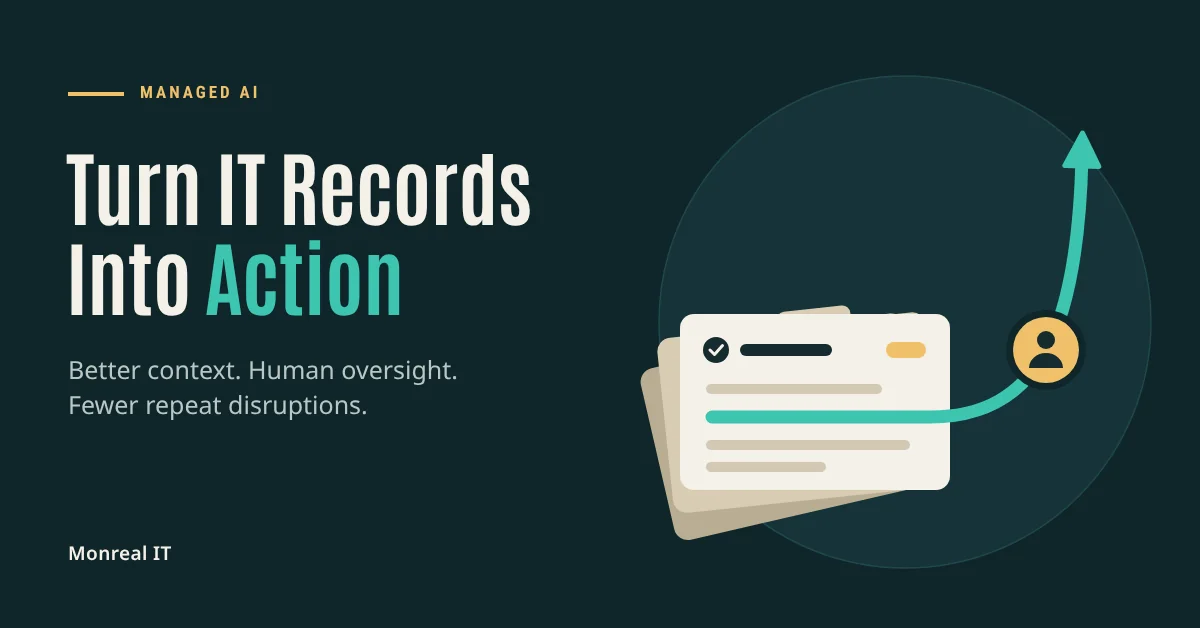
A recurring computer problem costs more than the time spent opening a ticket. It interrupts the person doing the work, delays the next step, and makes everyone wonder whether the fix will last. For a manufacturer or aerospace supplier, that interruption might hold up inspection records, purchasing, or a customer shipment.
That's a business problem showing up through technology, and it's why we treat IT as the operational foundation of a company, not a help desk. Better service starts with connecting what your systems already know to what should happen next. Ticket history, device information, security signals, and backup status can give technicians and automation a fuller picture. That context supports faster investigation, more consistent fixes, and earlier warning of repeat problems.
Consider a manufacturer whose inspection workstation keeps losing access to a business application. Each incident gets its own ticket. Each time, someone gathers device details, checks recent changes, and asks what happened before the interruption.
If that information stays disconnected, the same investigation starts over with every ticket. The team may restore access without ever recognizing the pattern behind the failures.
With connected records, the investigation can bring together earlier tickets, current device conditions, and recent configuration changes. A technician reviews the likely cause and approves an appropriate response. Afterward, the team verifies that access works, records the outcome, and considers whether monitoring could flag that condition earlier on similar workstations.
The practical goal is fewer repeat interruptions, less time spent reconstructing history, and better use of technical judgment. Closing tickets should help resolve recurring problems, rather than simply clearing today's queue.
The industry has a name for this shift. ConnectWise, which makes software that IT providers use to run their service operations, describes it as moving from a system of record to a system of action.
A system of record stores service tickets, device details, configurations, alerts, and work history. Those records matter, but a technician still has to connect the information, interpret it, and decide what to do. As an environment grows, so does that work. More devices and signals can mean more tickets and more manual investigation.
A system of action builds on those records. It connects information across service management, device monitoring, cybersecurity, and backup so workflows can investigate an issue, identify a likely cause, and recommend or carry out an authorized response. Then it documents the result for the next investigation.
The name matters less than the idea. Automation is the lever here, and automation is only as useful as the information it works from.
AI can't reliably choose the next step when the underlying information is missing, outdated, or attached to the wrong device. A detailed ticket doesn't help much if the asset record points somewhere else. An old workaround can be misleading if the application has changed.
That's why reliable company knowledge and accurate operational records remain essential. Device ownership, current configurations, previous fixes, application dependencies, and approved procedures all contribute to the context behind a decision.
The system of record isn't being discarded. It's the foundation. Adding AI to poor records doesn't repair that foundation, and connecting tools doesn't automatically make their information trustworthy.
For your business, a useful question is whether your provider can follow an issue from the affected person and device through investigation, approval, resolution, and verification. That continuity matters more than how many AI features appear on a product list.
Agentic AI means software can work through tasks toward a goal, rather than only generate a written answer. That makes permissions, approval rules, and accountability more important.
One recent example shows a sensible pattern. In an agent ConnectWise announced in October, the software runs read-only diagnostics and proposes a fix from a vetted catalog, and a technician has to explicitly approve any change to the device. The investigation is automated. The decision stays with a person.
That matches how we think about AI in general: human in the loop, always. For manufacturers and aerospace suppliers, a sensible operating model defines which systems automation can access, what information it can use, and which actions need approval. Restarting an application on an office PC and changing a system that supports production don't carry the same consequences.
Cybersecurity and business continuity belong in that decision. Approved access, a record of actions, a recovery plan, and a clear escalation path help keep service improvements accountable. Governance should be settled before deployment, with people responsible for decisions and exceptions.
You'll hear more vendors and providers talk about predictive IT. Treat it as a direction, because no one can predict or prevent every outage.
Progress should show up in your service results: fewer repeat incidents, faster restoration of useful work, or conditions caught before they interrupt employees. Those outcomes need evidence from your environment.
So ask your provider to prove it on one recurring issue, with one primary KPI, agreed in advance. For the inspection workstation, that could be the number of repeat access incidents over an agreed review period. Establish the baseline together, run a limited workflow, and review the result alongside the cost and effort involved.
Ongoing management after the pilot matters because applications, configurations, and risks change. A workflow that helped last month still needs review when the environment changes.
Whichever managed IT services Cleveland manufacturers are weighing, the useful questions are the same. What context reaches the technician? Who approves changes? How are results verified? What happens when the proposed action is uncertain?
At Monreal IT, we see managed services as one connected system: IT operations, cybersecurity, cloud, data analytics, and AI working toward business outcomes. We use AI and automation across our own operations, from the back office to front-line technicians, and we hold ourselves to the rule we recommend to clients: a person stays in the loop. AI is a capability that's built, governed, measured, and improved. Its value comes from the work it helps people do.
If recurring technology interruptions are slowing your team, Start Here with our Compatibility Check. We'll begin with the business problem and assess whether we're the right partner to help you move forward.
6 min read
Bill Monreal : November 12, 2026AI tools will keep changing. Learn what your business should own, from workflows to prompts and data, so your AI investment isn't stuck with one...

6 min read
Bill Monreal : October 22, 2026Help employees use AI confidently with approved workflows, clear data boundaries, hands-on practice, and human review tied to business outcomes.
6 min read
Bill Monreal : October 15, 2026Shared PCs need clear access, safe handoffs, and planned support. Learn what business leaders should include in their IT plan.