3 min read

My Biggest Client Demands Proof of Our Cybersecurity. What Now?

My Biggest Client Demands Proof of Our Cybersecurity. What Now?
5:16

Last Tuesday, my inbox pinged with a forwarded email from a client. The subject line was just "HELP" in all caps. Attached was a 50-page vendor risk assessment from his biggest enterprise account. The message was clear: fill this out and prove your security, or we pause all future orders. He felt targeted, confused, and entirely overwhelmed. If you're reading this, there's a very good chance you're in the exact same boat.

You aren't alone. As one of the top managed service providers Cleveland has to offer, we see this exact scenario play out regularly. Your clients aren't trying to punish you; they're simply trying to protect themselves. Let's break down exactly why this is happening and, more importantly, how you can answer them with confidence.

Why the Sudden Interrogation?

In my experience, these questionnaires are a massive headache. The web portals are clunky, the questions are often written in heavy IT jargon, and they demand proof of systems you might not even realize you needed. But honestly? I'm glad they're doing it. It forces the entire business ecosystem to level up and take security seriously.

Here's the objective reality: the corporate world is terrified of supply chain attacks. According to recent data from 2026, 85 percent of Chief Information Security Officers admit they can't fully see the third-party threats lurking in their supply chains. Even scarier is the fact that a staggering 98 percent of organizations have a relationship with a third party that has experienced a breach.

Cybercriminals have figured out that hacking a massive, Fortune 500 company directly is incredibly difficult. But hacking that enterprise's mid-sized vendor in Ohio? That's usually much easier. Hackers use smaller vendors as a backdoor into the larger target. Because the average cost of a data breach in the U.S. has surged past $10 million, these big companies simply can't afford the liability of an unsecured vendor. They're putting up a wall, and you need a digital passport to get in.

Translating the IT Jargon

When you finally sit down to look at the questionnaire, it can feel like reading a foreign language. Here's a quick translation of what they're actually looking for from a managed IT services team:

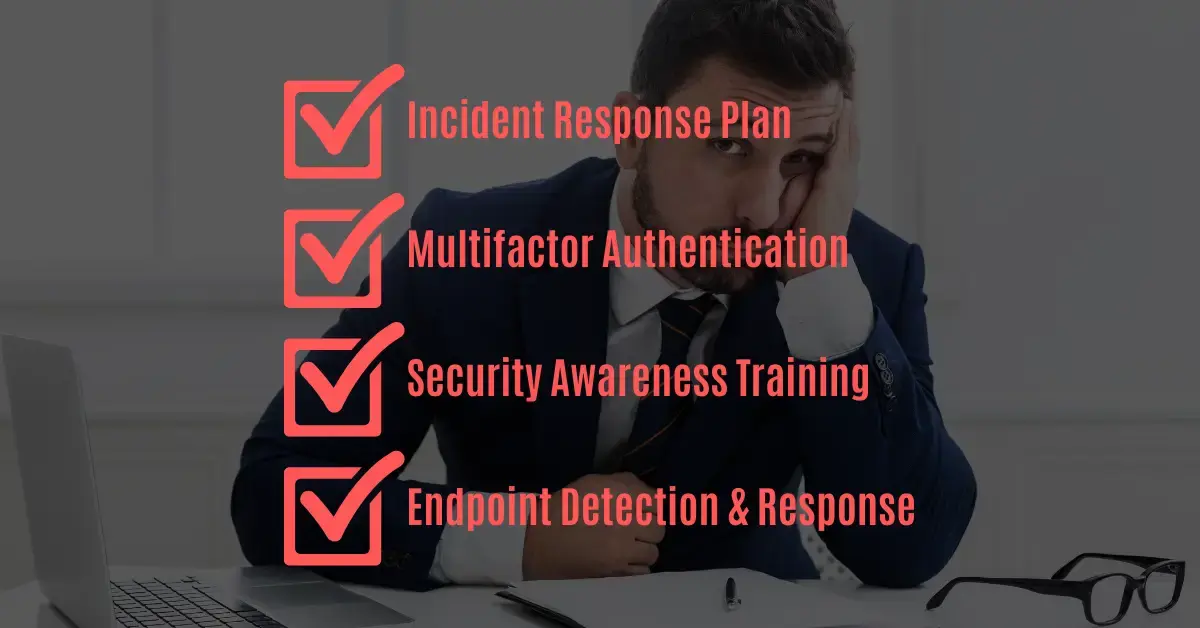
  • Access Controls: They'll ask about "Identity Management" or "MFA." This simply means they want to know that your employees need more than just a weak password to access company data. Two-factor authentication isn't optional anymore; it's the bare minimum security requirement.
  • Incident Response: They want to see your "IRP" (Incident Response Plan). Essentially, if you get hacked on a Tuesday at 2:00 PM, who are you calling at 2:01 PM? They want proof that you have a documented, rehearsed plan to stop the bleeding and notify them immediately.
  • Employee Awareness: Are your people trained to spot phishing scams? They want to see certificates or logs proving your team undergoes regular cybersecurity awareness training.
  • Compliance Frameworks: Depending on your industry, they might ask if you're compliant with specific regulations. For example, if you handle Department of Defense contracts, they'll ask about CMMC 2.0. If you're an accountant, they might ask about a Written Information Security Plan, which is now required by the IRS for PTIN renewals.

How to Answer (Without Losing Your Mind)

Step 1: Don't Fake It. I can't stress this enough: don't check "yes" on a security control if you don't actually have it in place. These questionnaires are legally binding documents. If you claim to have encrypted backups and a hacker wipes your data because you actually didn't have them, you're in breach of contract. That's a lawsuit you won't win.

Step 2: Gather Your Current Documentation. Pull together whatever you currently have. This might include your acceptable use policies, your cyber insurance policy details, and any past IT audits you've had performed.

Step 3: Bring in the Experts. You're an expert in running your business, not in deciphering cybersecurity acronyms. Bring in a professional team to audit your current stance, find the gaps, and implement the necessary controls. We help businesses fill out these questionnaires all the time. We know exactly what enterprise risk managers are looking for, and we know how to implement the solutions that'll get your contracts signed and renewed.

Don't let a security questionnaire be the reason you lose your best client. By viewing this as an opportunity to genuinely secure your operations, you transform a point of anxiety into a major competitive advantage. When you can hand a pristine, fully compliant security profile back to your enterprise client, you aren't just saving an account, you're proving that your business is a mature, reliable partner that they can trust for the long haul.

It's time to stop playing defense and start using your cybersecurity posture as a selling point. If you need help translating the jargon or implementing the right tools to pass these audits, reach out to us today. We're here to guide you through the noise.


How Much Should Managed IT Services Cost in Cleveland (2026)

How Much Should Managed IT Services Cost in Cleveland (2026)

We talk to business owners across Northeast Ohio every week, and the number one frustration we hear isn't about broken printers or slow Wi-Fi. It's...

Read More
Claim Denied? 4 Reasons Cyber Insurance Won't Pay Out in 2026

Claim Denied? 4 Reasons Cyber Insurance Won't Pay Out in 2026

The 40-Page Trap Waiting for Your Business I spent three straight hours last Tuesday pouring over a 40-page cyber insurance renewal questionnaire for...

Read More
That's Not Your CEO: The AI Voice Scam Targeting Ohio Businesses

That's Not Your CEO: The AI Voice Scam Targeting Ohio Businesses

That's Not Your CEO on the Line Picture this: It’s a hectic Thursday afternoon. You’re trying to close out the week, and the phone rings. It’s your...

Read More