7 min read
The No-Drama Cloud Migration Checklist for Small Businesses
 Bill Monreal : July 16, 2026
Use this cloud migration checklist to protect files, control access, reduce downtime, and help your team settle in without chaos.

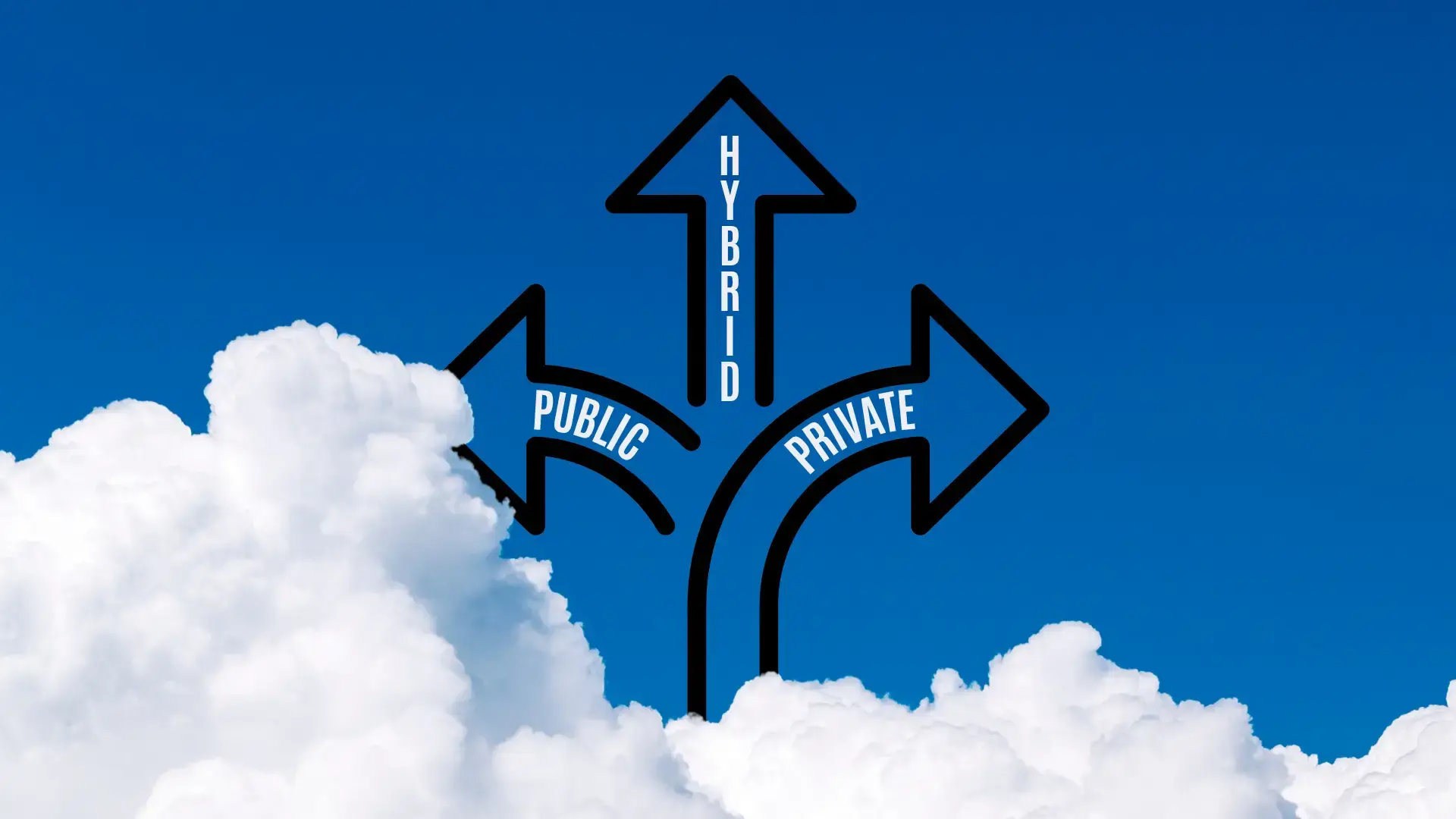
Choosing a cloud environment for your business feels a lot like choosing a new office space. Do you rent a suite in a massive, bustling skyscraper? Do you build your own custom headquarters from the ground up? Or do you lease a private office but use the building's shared conference rooms? Each option has its own benefits related to cost, security, and control.
Cloud computing has moved from a buzzword to a business necessity, but the jargon can be overwhelming. Public, private, hybrid... what does it all mean for your bottom line and your data security? Let's clear the fog and break down these options so you can make an informed decision, not just a shot in the dark.
Think of the public cloud as a massive, multi-tenant apartment building run by giants like Amazon (AWS), Microsoft (Azure), and Google (GCP). You rent an apartment (server space), and you share the building's infrastructure, security, and maintenance with thousands of other tenants.
Public clouds operate on a pay-as-you-go model, where you're only billed for the resources you consume. This makes it incredibly scalable, but can also lead to unexpectedly high bills if not managed carefully.
Pros:
Cons:
We once worked with a Cleveland-based marketing agency that went all-in on a public cloud. For them, it was a no-brainer. Their resource needs fluctuated wildly with client campaigns. The ability to spin up servers for a three-week project and then shut them down was a massive cost saving. Their team didn't have the expertise to manage hardware, and they didn't want to. It was the perfect fit.
A private cloud is the exact opposite. It's your own dedicated hardware, infrastructure, and software, all for your exclusive use. This is the digital equivalent of a high-security vault that you own outright. The only downside is you also have to be the security guard, the janitor, and the maintenance crew.
Honestly, for businesses in healthcare, finance, or defense contracting dealing with highly sensitive data, the peace of mind a private cloud offers is often worth the extra investment.
Pros:
Cons:
You've probably guessed it by now. The hybrid cloud is a mix of both public and private clouds, connected to operate as a single environment. It's like having a secure, private office for your sensitive files but using a flexible, cost-effective coworking space for your day-to-day meetings.
I was surprised by how many of our manufacturing clients adopted a hybrid approach. They'll keep their proprietary design files and financial data on a private, on-site server but use the public cloud for their customer-facing website and email. This setup gives them rock-solid security where it counts and cost-effective flexibility where it doesn't.
Pros:
Cons:
The right choice depends entirely on your business's unique needs. There's no single "best" answer. To help you decide, ask yourself these questions:
Making this decision is a significant strategic move. It's not just about technology; it's about aligning your IT infrastructure with your business goals.
At Monreal IT, we don't just sell you a solution. We help you understand the landscape so you can choose the path that empowers your business to grow securely and efficiently. If you're ready to have a conversation about what your next step in the cloud should be, let's talk.
7 min read
Bill Monreal : July 16, 2026Use this cloud migration checklist to protect files, control access, reduce downtime, and help your team settle in without chaos.

5 min read
Bill Monreal : February 5, 2026Facing a server refresh? We break down the real costs and headaches of on-premises servers vs. SharePoint for Cleveland businesses.
6 min read
Bill Monreal : December 31, 2025Stuck between Microsoft 365 and Google Workspace? We break down the honest pros, cons, and hidden costs to help Ohio business owners decide.